
 Image 1 of 1
Whitman Wednesdays with a Dose of Dickinson: Lyric Mysticisms and Democratic Vistas of 19th Century American Poetry
What you get when you buy a ticket:
Snacks and refreshments - Bottled water, coffee, fresh fruit plate, fresh veggie tray, and crackers and flatbread
A printout of all the pages covered in that day’s reading
The full packet of printed text mapping worksheets
Your original writings about the subject can be published in the reading group’s book release every fourth week. The book’s mapping and texty spreadsheets will be printed out in the publication, along with the writings of the participants.
*
Why start a reading group about this book?
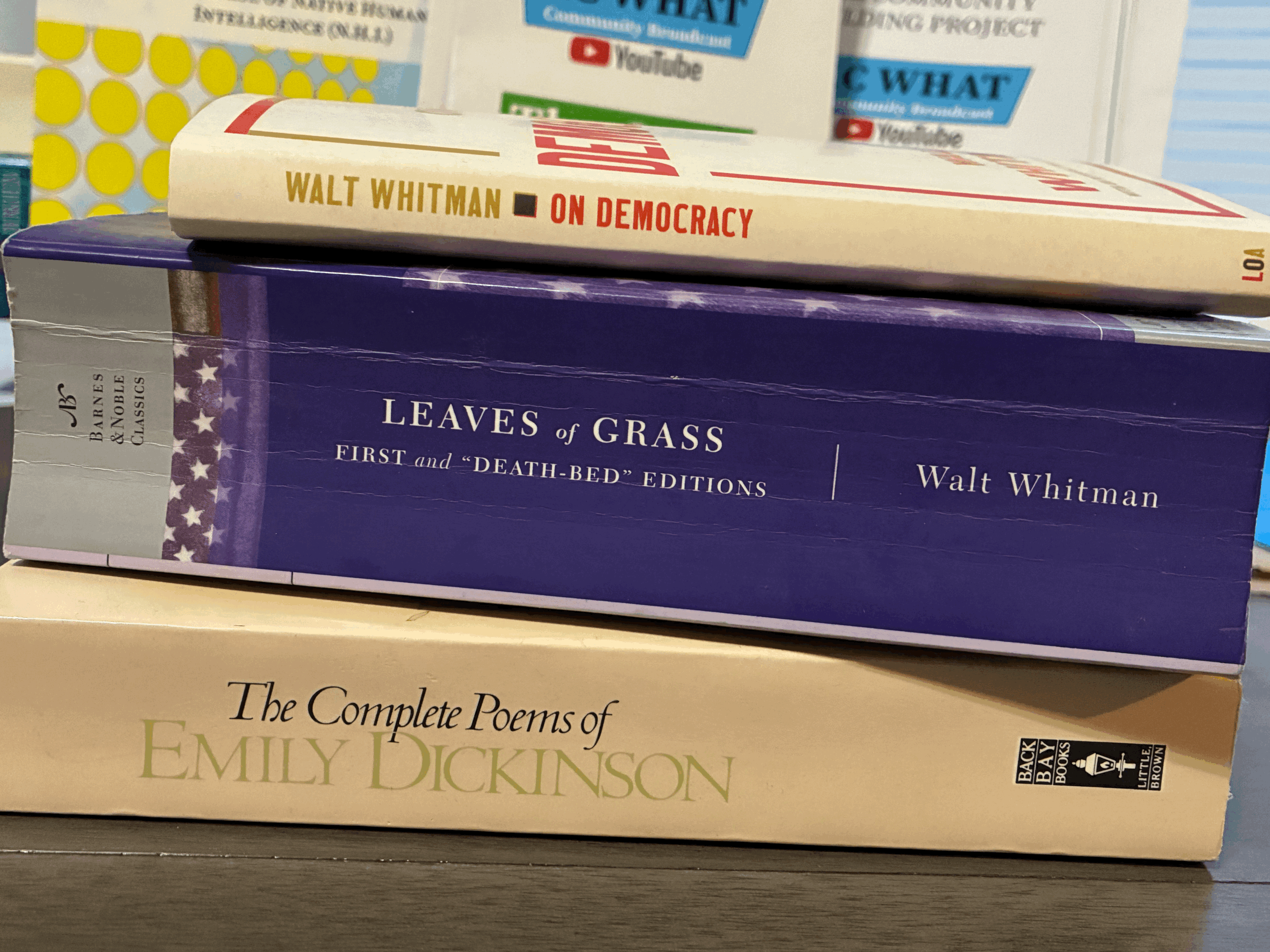
Walt Whitman is not only one of the greatest American poets, he is the poet of America, in the sense that his poetic project and the project of America align. Leaves of Grass makes that clear: Whitman was consciously trying to create the poem of America: expansive, energetic, new, of both high and low culture, soaring, sordid, commonplace, beautiful.
Central to this 19th century American poetry reading group will be the exploration of Leaves of Grass, a long-term project for this vast corpus, in which we will survey the meanings of Whitman’s “lyric mysticisms.”
In the short term, this reading group will begin with an additional focus phrase: “democratic vistas.” This was the title Whitman gave to an 84 page pamphlet released in 1871, one of Whitman’s longest prose pieces, Democratic Vistas, an essay reflecting on Whitman’s sense of democracy, and specifically American democracy. Along with that we will focus on Whitman’s unpublished essay “On the Eighteenth Presidency,” written in 1856, a democratic rallying cry to the citizens of the young United States as a constitutional crisis loomed. These prose works on American democracy fill out the edges of the vision of humanity and the cosmos that Whitman lays out in Leaves of Grass.
I only hesistate to call Whitman the greatest American poet of the 19th century because Emily Dickinson also lived and wrote. We will start digesting her work by focusing on the meanings of “lyric mysticisms” in The Complete Poems, reading them one by one, line by line, dash by dash.
At the end of the meeting up to five people can get a poem to memorize for the following meeting. You choose Whitman or Dickinson, and we spin the wheel to assign you a two page piece of a poem or poems around two pages long to memorize.
At the next meeting you can recite the lines and get a $10 credit, losing $1 of the credit for each mistake or forgotten word. You can also choose to perform it a second time with no money on the line, and try to give the best delivery you can, the best dramatic reading that conveys the right tone.
*
Why participate in KC What reading groups?
You do not have to read the book before the meeting. We will read it together, out loud, with different readers for each page.
If you have already read the book, you can share and fortify your grasp of the subject by participating to create a unique text mapping of the book and its themes and references.
The group presents a structure for analyzing a text, but also approaches books as more than content, just information. By reading aloud together you get a sense of the rhythm of a text and hear how other people emphasize certain words and phrases.
It will take a long time to go through a book in this way. As we progress through it, we will create a texty spreadsheet by voting on the most significant sentence on each page, and submitting one sentence succinct summaries for individual pages.
As a reader in a slow, collective reading group, you will deepen the reading experience by reading around the main text, exploring the other books and references cited, and producing writing based on your knowledge that can be included in the reading group’s monthly publication.
*
By purchasing this ticket, you are consenting to be part of video recording and other documentation of this text mapping project. The worksheets you fill out are 100% yours, you can choose to share or save or edit or disregard them, but just know that you might be on video at the meeting and that you will contribute to compiling the texty spreadsheet.
What you get when you buy a ticket:
Snacks and refreshments - Bottled water, coffee, fresh fruit plate, fresh veggie tray, and crackers and flatbread
A printout of all the pages covered in that day’s reading
The full packet of printed text mapping worksheets
Your original writings about the subject can be published in the reading group’s book release every fourth week. The book’s mapping and texty spreadsheets will be printed out in the publication, along with the writings of the participants.
*
Why start a reading group about this book?
Walt Whitman is not only one of the greatest American poets, he is the poet of America, in the sense that his poetic project and the project of America align. Leaves of Grass makes that clear: Whitman was consciously trying to create the poem of America: expansive, energetic, new, of both high and low culture, soaring, sordid, commonplace, beautiful.
Central to this 19th century American poetry reading group will be the exploration of Leaves of Grass, a long-term project for this vast corpus, in which we will survey the meanings of Whitman’s “lyric mysticisms.”
In the short term, this reading group will begin with an additional focus phrase: “democratic vistas.” This was the title Whitman gave to an 84 page pamphlet released in 1871, one of Whitman’s longest prose pieces, Democratic Vistas, an essay reflecting on Whitman’s sense of democracy, and specifically American democracy. Along with that we will focus on Whitman’s unpublished essay “On the Eighteenth Presidency,” written in 1856, a democratic rallying cry to the citizens of the young United States as a constitutional crisis loomed. These prose works on American democracy fill out the edges of the vision of humanity and the cosmos that Whitman lays out in Leaves of Grass.
I only hesistate to call Whitman the greatest American poet of the 19th century because Emily Dickinson also lived and wrote. We will start digesting her work by focusing on the meanings of “lyric mysticisms” in The Complete Poems, reading them one by one, line by line, dash by dash.
At the end of the meeting up to five people can get a poem to memorize for the following meeting. You choose Whitman or Dickinson, and we spin the wheel to assign you a two page piece of a poem or poems around two pages long to memorize.
At the next meeting you can recite the lines and get a $10 credit, losing $1 of the credit for each mistake or forgotten word. You can also choose to perform it a second time with no money on the line, and try to give the best delivery you can, the best dramatic reading that conveys the right tone.
*
Why participate in KC What reading groups?
You do not have to read the book before the meeting. We will read it together, out loud, with different readers for each page.
If you have already read the book, you can share and fortify your grasp of the subject by participating to create a unique text mapping of the book and its themes and references.
The group presents a structure for analyzing a text, but also approaches books as more than content, just information. By reading aloud together you get a sense of the rhythm of a text and hear how other people emphasize certain words and phrases.
It will take a long time to go through a book in this way. As we progress through it, we will create a texty spreadsheet by voting on the most significant sentence on each page, and submitting one sentence succinct summaries for individual pages.
As a reader in a slow, collective reading group, you will deepen the reading experience by reading around the main text, exploring the other books and references cited, and producing writing based on your knowledge that can be included in the reading group’s monthly publication.
*
By purchasing this ticket, you are consenting to be part of video recording and other documentation of this text mapping project. The worksheets you fill out are 100% yours, you can choose to share or save or edit or disregard them, but just know that you might be on video at the meeting and that you will contribute to compiling the texty spreadsheet.